Softube Weiss DS1-MK3 Review: Is the Mastering Legend Still Worth $549?
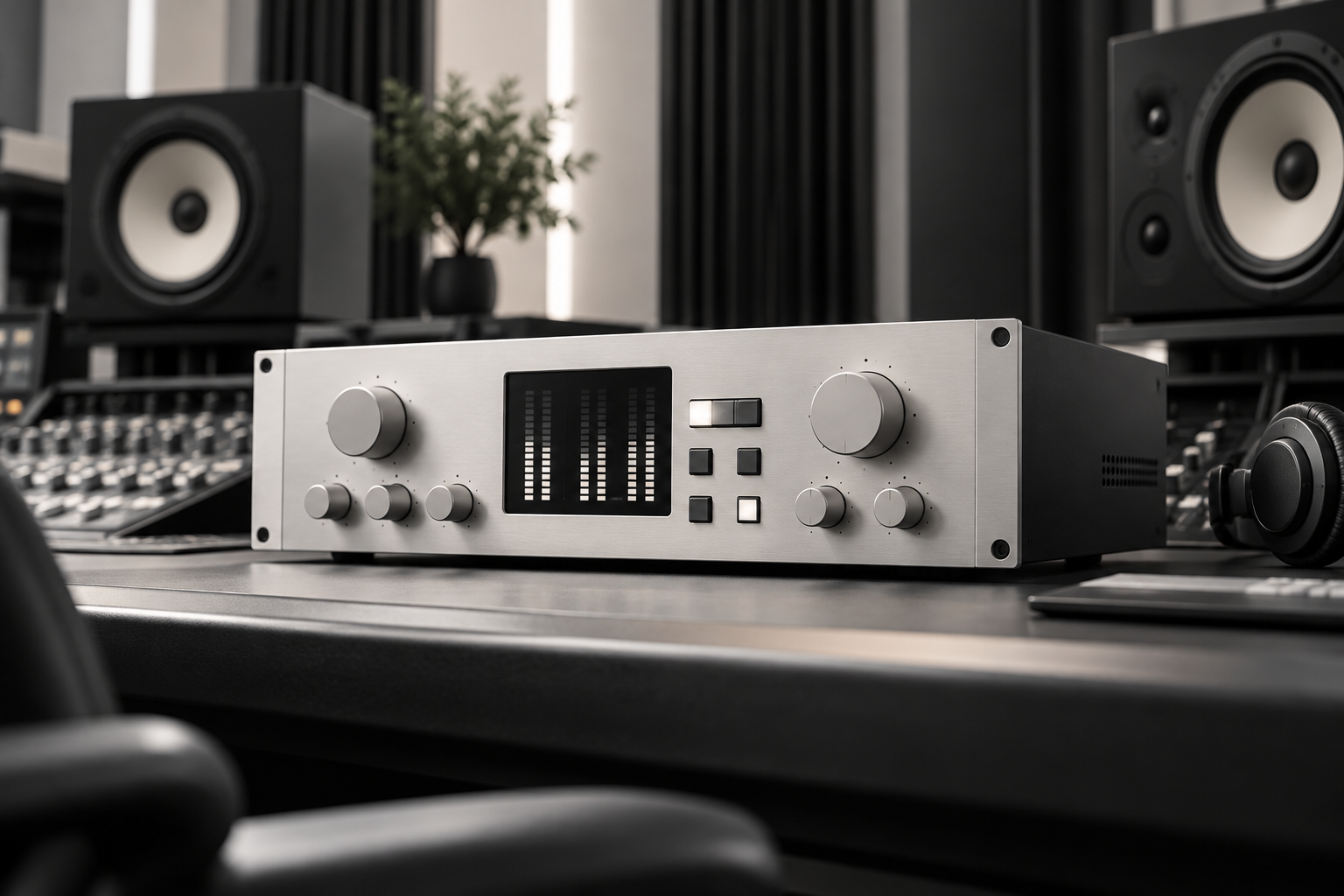
The DS1-MK3 is not a plugin you demo for twenty minutes and decide on. It’s a dynamics unit that has sat in mastering rooms since the 1990s, and Softube’s emulation is priced accordingly. The mistake people make is treating the $549 like a plugin purchase. It’s closer to buying a piece of processing philosophy, and you need to know whether that philosophy fits what you do before the money leaves your account.
I’ve worked with both the software and the hardware lineage it’s modelled on. Here’s what I actually think.
What This Thing Is
The Weiss DS1-MK3 is a digital dynamics processor. Three tools in one box: a de-esser, a compressor, and a limiter. That tripartite design is the point. On a lot of masters you want to touch the top end, control a couple of peaks, and catch the last transients, all without reaching for three separate plugins that each bring their own colour and latency.
Softube’s version is a meticulous model of the original Weiss hardware, including the way the compressor and limiter interact. You get parallel compression, mid/side operation, and the DS1’s particular take on gain reduction that’s gentle enough to leave the mix alone.
The De-esser Is the Real Reason
Here’s where my opinion gets specific. If you’re buying this primarily as a compressor, you’re overpaying. There are cleaner, cheaper compressor options that are more transparent and more flexible.
But the DS1’s de-esser is a different animal. It doesn’t grab sibilance with a hard threshold and yank. It reads the spectrum and eases harshness out progressively. On bright pop vocals or cymbal-heavy mixes, it does something that most de-essers can’t: it removes the sting without dulling the air.
That’s the specific thing you’re paying for. Not the compressor. Not the limiter. The de-esser, and the way it operates at mastering level rather than as a corrective tool.
Compression: Gentle, Not Fast
The compressor on the DS1 is a slow, smooth, almost invisible thing. I’ve used it for 1 to 2dB of compression on a master and it behaves like a very good opto-style circuit, with a soft knee and release that sits back into the mix without pumping.
What it isn’t: a fast peak-catcher. If you’re making loud electronic music and need to tame transients with authority, the DS1 will feel soft and slow. You’ll want something else for the aggressive work, and then the DS1 becomes more of a colour choice than a utility.
I pulled most of these from the plugin archive.
The Limiter Situation
One common mastering approach is to use the DS1 for the shaping stage and then pair it with a dedicated limiter (a clean one like FabFilter‘s Pro-L2 is a frequent pairing) for final loudness. That’s because the DS1’s limiter, while musical, is not a loudness machine.
Used alone for final limiting, it caps out quickly. Used in tandem with a second stage, it lets you split the processing between two units and slow down the cumulative distortion. On acoustic and classical material that’s a genuine benefit. On trap, no.
What It Costs You
$549 is a lot for one plugin. Full stop. There’s no burying that number. And the honest comparison isn’t another Weiss plugin. It’s every mastering tool you could buy with that money, plus a decent chunk of change.
My view is that the DS1 only justifies its price if you’re mastering regularly for clients and need the DS1’s particular smoothness on a regular basis. If you’re mixing your own music, or doing occasional self-mastering, the money is better spent on a clean EQ, a flexible compressor, and a limiter you trust. You can get most of the way to the DS1’s sound with less expensive tools and more work.
When I Would Not Buy It
Skip it if your masters are heavily edm-focused and need hard limiting. Skip it if you’re doing lots of restoration or repair work, where the DS1 is a subtle tool, not a surgical one. Skip it if you’re buying plugins to collect them rather than to solve a problem.
Buy it if you’re a mastering engineer whose clients regularly bring you bright, sibilant vocals that need a touch rather than a fix, and you want that touch to sound like nothing happened.
One more thing: demo it properly. This is one of those plugins that sounds worse on a headphones-only demo and much better once you’ve lived with it through a proper monitoring chain on two or three real jobs. The DS1 is subtle enough that a quick trial will make it feel overpriced. Give it a week on actual work before you decide.
That subtlety is the whole case for it. And the whole case against it.