Harrison MPC Channel Strip Drops to $29: Film Console DSP for Your DAW
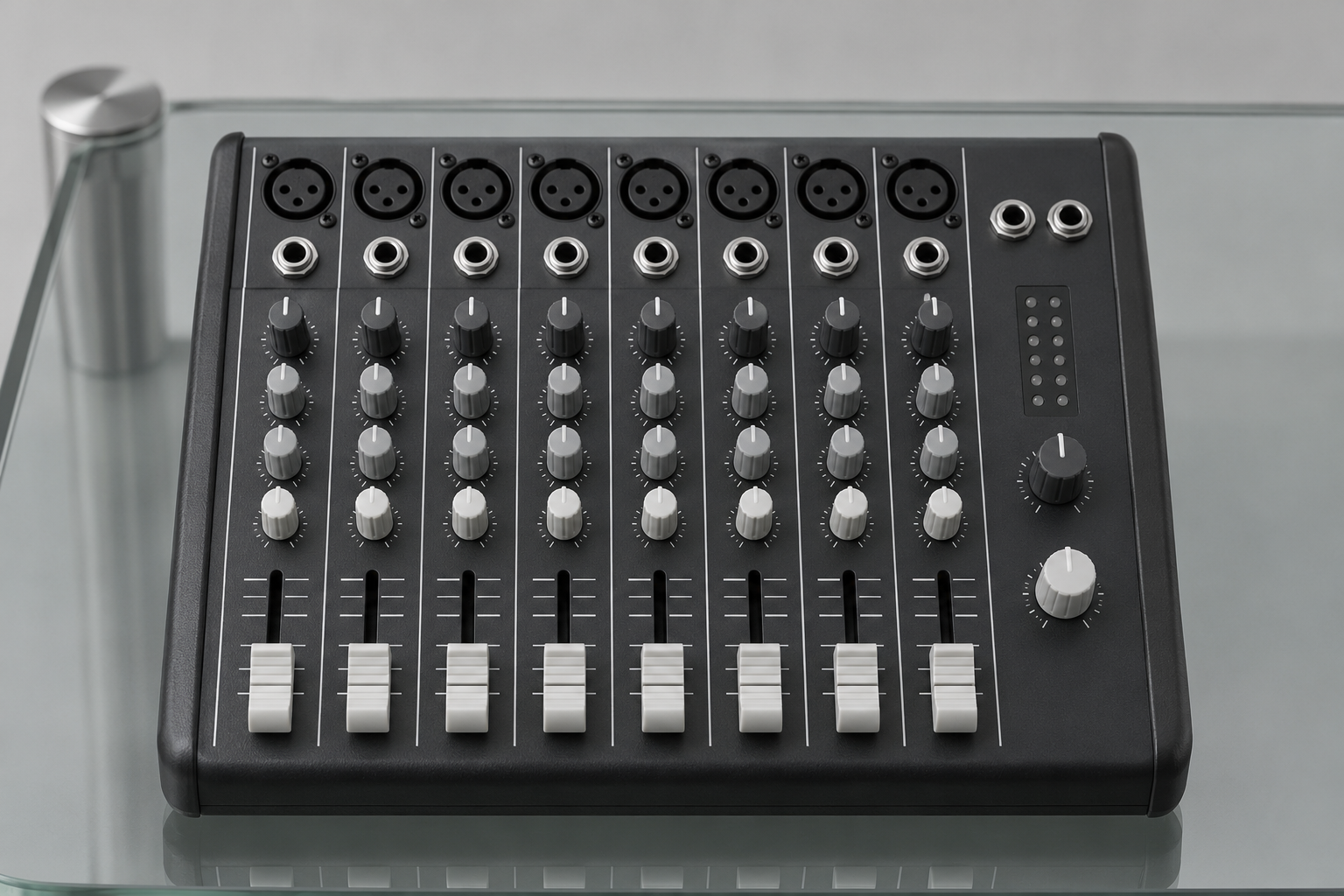
Most people buy a channel strip to save time and end up using about a third of it. They reach for the EQ, maybe the compressor, ignore the rest, and a year later they’ve forgotten the routing quirks that made it slightly annoying on day one. Harrison’s MPC Channel Strip is the exact product where that happens, because it’s built around how a large-format film console actually behaves, not around a tidy plugin GUI.
Right now it’s twenty-nine dollars. That number matters because it puts a genuine film-console signal path into the range of an impulse buy, and it’s the part of this deal worth thinking about for more than ten seconds.
What you’re actually buying
Harrison’s mixing desks have a long history in film scoring and post, and the MPC Channel Strip is their attempt to compress one channel’s worth of that console into a single plugin window. In practice that means an input stage, dynamics, and EQ sitting in a fixed order you can’t rewire, which is the whole point. It’s a channel, not a modular chain.
The console lineage is the reason to care. A Harrison desk in a scoring room isn’t there because it sounds flattering in a twelve-second A/B. It’s there because dialogue and orchestral stems have to survive being pushed and folded down through a print master without collapsing. The DSP in this thing is aimed at that job: staying clean under gain, keeping low mids intact when the compressor is working, and not adding a personality you then have to EQ back out.
That’s a different target than a Neve-style strip or one of the SSL-flavoured emulations. If your reference point is a console that adds weight and attitude on the way in, this will feel like the wrong tool. If you want something that behaves like a utility channel on a big desk, it’s closer to right.
Where it fits in a normal session
The obvious home is the insert on a vocal or a bus. I’d start on the two things that actually suffer in a home room: drum buses and mix buses, where the low-mid build-up is the real problem and a fixed-order channel strip forces you to deal with it before you start reaching for corrective plugins.
There’s a case for it on individual sources too, especially if you record in a room with less than ideal treatment. The classic advice that a clean interface and some acoustic treatment beats an expensive microphone in a bare room holds here in a different way: a fixed top-to-bottom channel path teaches you where your capture is already weak. If the compressor is fighting hard to make a tom sit, the problem was the microphone placement. The plugin just exposes it.
On orchestral and score sessions, the order matters more than the settings. Having EQ downstream of the dynamics means the compressor reacts to the raw signal rather than something you’ve already carved. That’s how a real console channel works, and it’s why film mixers can trust the same moves across hundreds of stems.
The honest drawbacks
It isn’t a modern plugin in the workflow sense. No oversampling switch, no dynamic EQ, no spectrum analyser. If you’ve built your mix around a parametric that shows you exactly where a resonance sits, jumping to a fixed layout is going to feel like losing a limb for the first hour.
There’s also the question of what you’re paying for versus the free market. Free dynamic EQs like TDR Nova and the current crop of free clippers do a huge amount of a modern mix’s heavy lifting, and they cost nothing. A paid channel strip has to justify itself with character and workflow, not features. The Harrison strip justifies itself on character, which is subjective, and on the fixed architecture, which some engineers hate and some find liberating.
Then there’s the practical one: at twenty-nine dollars, check what the license actually covers. iLok requirements, activation counts, and whether the price is a permanent drop or a sale with a quiet end date all change the decision. Read the product page before you click. The hardware world taught me this the expensive way.
Should you buy it
If you mix music for a living and already have a preferred strip, this probably isn’t going to replace it. The muscle memory tax is real, and a $29 plugin that sits unused is still $29 spent.
If you’re building a template around a console-style workflow, or you work on film and game audio where clean gain staging across a lot of channels is the daily reality, this is the moment. The price isn’t the story. The story is that a film-console channel architecture is sitting in a normal DAW insert slot for the cost of two coffees, and it behaves differently enough from the usual suspects that it’s worth the download to find out if that difference is useful to you.
If you don’t know whether you need it, you don’t. Buy a better microphone stand instead. You will use that every single day.